New
Why we started with bank statements
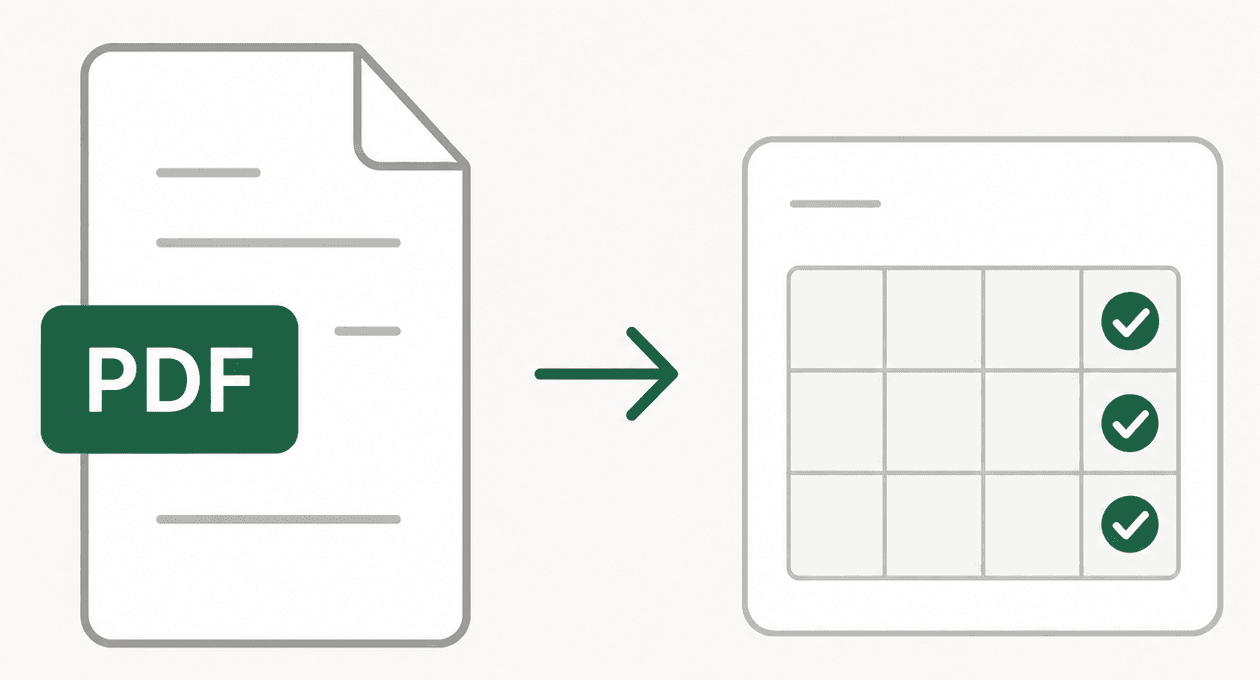
Every bookkeeping job starts the same way. A client sends a PDF bank statement.
Before anything reaches your accounting software, someone has to open that document, pull out every transaction, and confirm the numbers hold. It is repetitive work, and it still has to be right.
Most AI tools are built to produce an answer. In bookkeeping, the answer is not the hard part. A confident wrong number is worse than a blank field, because it looks finished. It travels into a reconciliation, then into a return, and you are the one who has to find it later.
So we split the job in two. The model reads the document and extracts what it sees. Ordinary code then redoes the arithmetic: the totals, the closing balance, and the running balance row by row wherever the statement prints one. Anything that does not reconcile is flagged for review, never smoothed over.
That is the whole idea. Extraction can be probabilistic. Verification cannot.
We are not trying to replace your accounting software. The ledger is not our territory. What we want is the work that happens before the ledger: the hours spent turning paper and PDFs into something a system will accept.
Today the tool handles bank statements. The question behind it is larger: the whole financial record starts as documents, and that is where the manual work piles up.